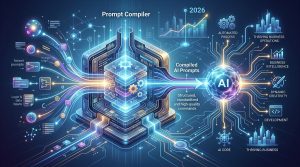
Prompt chains can supercharge complex reasoning tasks, but they cannot fully replace human decision-making. They lack common sense, ethical reasoning, and contextual awareness. The best results come from combining chain-of-thought prompting with human oversight. This guide shows you how to build that balance for smarter, safer AI workflows.
Picture this: a legal team uses a prompt chain to analyze thousands of pages of case law in seconds. A medical researcher runs a sequence of reasoning prompts to narrow down potential drug interactions. A supply chain manager automates multi-step logistics decisions with a series of chained prompts. These scenarios are real in 2026. And they are raising a big question: do we even need humans in the loop anymore?
The short answer is yes. The longer answer shows that prompt chains are a tool, not a replacement. They handle the heavy lifting of logical reasoning and data processing. But human decision-making brings values, ethics, and context that no model can replicate. Let’s look at why.
The Rise of Prompt Chains in Decision Automation
A prompt chain is a sequence of instructions where the output of one prompt feeds into the next. Instead of asking an AI one question, you break a complex problem into smaller, logical steps. Each step builds on the previous one, guiding the model toward a more reliable answer.
For example, suppose you want to evaluate a new product launch strategy. A single broad prompt might give you a generic list of pros and cons. But a prompt chain can first ask the model to identify market trends, then assess competitive responses, then calculate financial risks, and finally synthesize a recommendation. The chain ensures the model follows a structured reasoning process.
Companies use prompt chains for everything from customer support triage to scientific research. They cut down on errors, reduce hallucination risks, and make AI outputs more consistent. That is powerful. But it also creates a temptation to hand over decisions entirely.
Where Prompt Chains Shine (And Where They Fall Short)
Prompt chains excel at tasks that follow a clear, deterministic logic. They are great for arithmetic, document summarization, and step-by-step classification. But they struggle with ambiguity, moral judgment, and situations where the human context matters more than the data.
The table below shows common techniques and their common mistakes.
| Technique | Strengths | Typical Failure Point |
|---|---|---|
| Chain-of-thought prompting | Breaks down reasoning, improves accuracy on math and logic | Model can still hallucinate facts mid-chain |
| Multi-step classification | Filters large data sets reliably | Hard to adjust when categories change |
| Feedback loops in chains | Self-corrects errors via iterative prompts | Can amplify biases if initial prompt is flawed |
| Human-in-the-loop checkpoints | Adds verification at key stages | Slows down automation; often skipped |
The mistake many teams make is assuming a well-crafted chain removes the need for human review. In reality, the chain is only as good as the person who designed it and the data it was trained on.
How to Build Effective Prompt Chains Without Losing Human Oversight
Building a effective chain is a craft. It requires thinking through each step and knowing when to pause for human judgment.
Here is a practical numbered process:
-
Define the decision boundary. Decide which parts of the problem can be fully automated (like sorting or calculations) and which need a human call (like prioritization or ethical trade-offs). Mark those boundaries in your chain.
-
Design each prompt to be self-contained. Each step should produce a clear output that a human can understand if needed. Avoid opaque intermediate results that only make sense inside the chain.
-
Insert a human checkpoint at critical junctures. At points where the output affects people, budgets, or safety, require a person to approve before the chain continues. This is not slowing down; it is protecting.
-
Test the chain on edge cases. Run scenarios that are unusual or conflicting. For example, what happens if the chain has to resolve contradictory data? A human should spot when the model gets confused.
Common pitfalls to avoid in your chains:
- Relying on a single source of truth in the chain (model can fabricate sources)
- Using long chains without any feedback validation
- Not updating prompts when the business context changes
- Treating chain output as final without sanity checks
“A prompt chain is a reasoning scaffold, not a decision maker. The moment you treat it as the final authority, you lose the ability to catch its blind spots.” – Dr. Alisha Tran, AI Ethics Researcher, 2026
The Human Element: Why Judgment Still Matters
Human decision-making is about more than processing facts. It involves values, empathy, long-term vision, and the ability to handle paradoxes. Prompt chains, no matter how sophisticated, cannot weigh competing interests the way a person can.
Consider a hiring scenario. An AI chain can rank candidates based on skills and experience. But a human recruiter considers cultural fit, growth potential, and subtle signals from an interview. Those qualities are almost impossible to encode into a prompt chain without oversimplifying.
Similarly, in business strategy, a chain might suggest the most profitable move. But a human leader has to consider brand reputation, employee morale, and societal impact. The chain lacks that perspective.
That does not mean prompt chains are useless. It means they are decision support systems, not decision replacement systems. The best organizations treat them as expert advisors that always need a second opinion.
Smart Strategies for Blending AI Reasoning with Human Intuition
The goal is not to eliminate human judgment, but to make it faster and more informed. Here are three strategies that work in 2026.
-
Use chains for prework, not final answers. Let the chain gather data, generate options, and outline pros and cons. Then present those to a human who makes the final call.
-
Build in explainability. Design each prompt to output not just the answer, but the reasoning steps. When a human reviews, they can see how the model arrived at a conclusion and decide whether to trust it.
-
Test with real-world scenarios. Before deploying a chain in production, run it on historical decisions. Compare its recommendations to what humans actually chose. Notice where it diverged and adjust.
For more tactical advice on improving your own prompts, check out our guide on It covers how to debug chains when they go wrong.
A Practical Framework for Using Prompt Chains in Decision Workflows
If you want to integrate prompt chains without risking bad decisions, follow this loop:
- Automate all mechanical steps (data retrieval, sorting, calculations)
- Flag any output that involves trade-offs (safety, ethics, resource allocation)
- Escalate flagged items to a human team with the chain’s reasoning attached
- Log the final decision (human + AI reasoning) to improve future prompts
This approach keeps the speed of automation while preserving human accountability. It is the model used by leading AI vendors in 2026, and it works.
The Role of Human Oversight in an AI-Enhanced Future
We are not heading toward a world where machines decide everything. But we are heading toward a world where people who understand prompt chains have a major advantage. They make better decisions faster, but they also know when to trust their gut.
If you are building systems that rely on prompt chains, keep one rule in mind: the chain does not replace you. It amplifies you. Use it to cut through complexity, but never hand over the final say.
For a deeper look at how prompting techniques are evolving, read our article on It shows real-world examples of chains in action.
And if you want to stay ahead of the curve, check out the latest trends in The teams that balance AI reasoning with human insight will lead the next wave.
The choice is yours. Use prompt chains to inform your decisions, not make them. That is the smart path forward.